
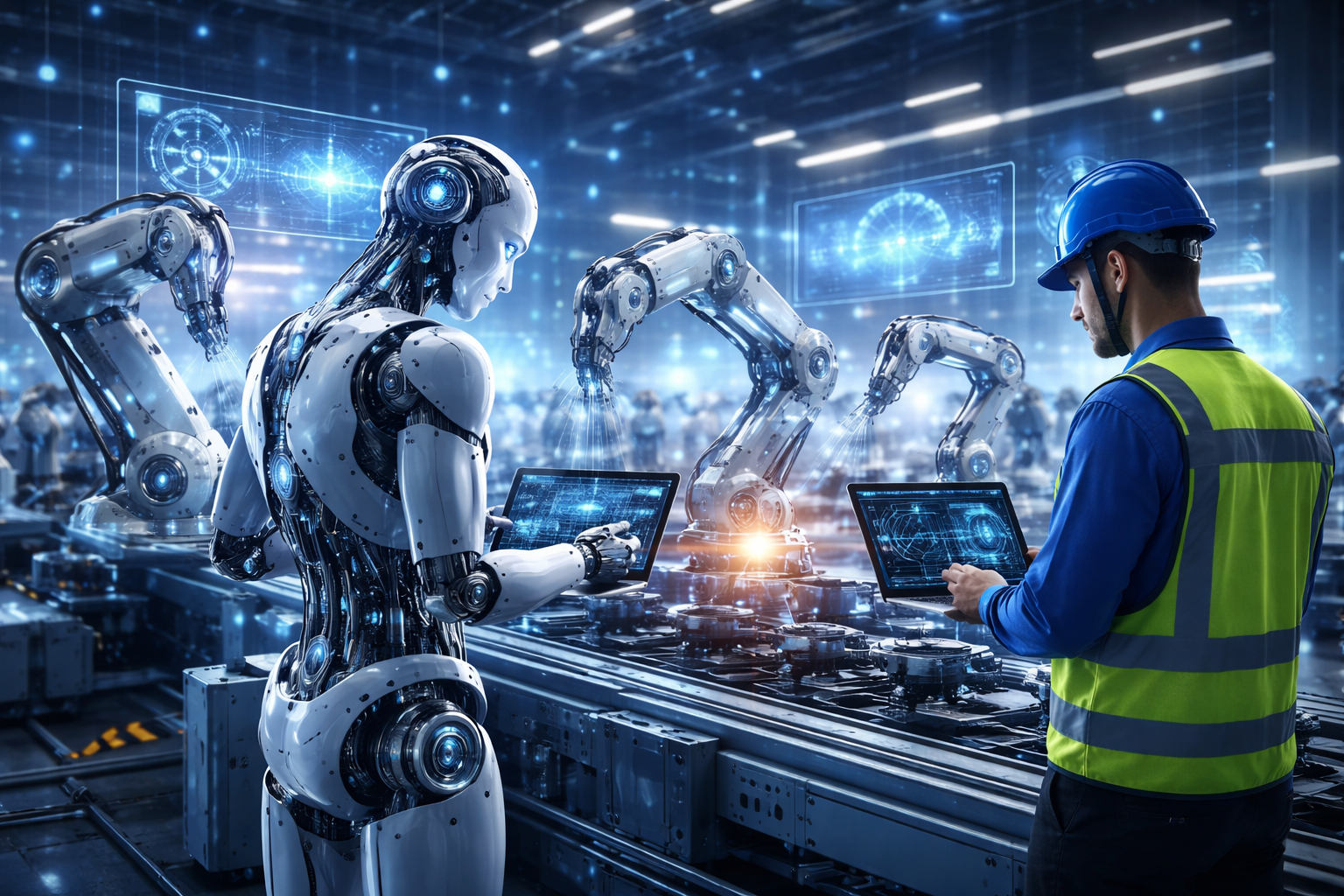
Robotics & Automation Redefining Workplaces
In the modern era of digital transformation, robotics and automation have become more than just technological advancements — they’ve become catalysts reshaping how industries operate. What was once a futuristic vision of robots assisting humans is now a daily reality across manufacturing floors, hospitals, retail stores, and even offices. As automation technologies become more intelligent, efficient, and affordable, workplaces around the world are experiencing a massive transformation in productivity, safety, and innovation.
1. The Evolution from Machines to Intelligent Co-workers
The journey of automation began with simple mechanical systems designed to perform repetitive tasks. However, with the integration of Artificial Intelligence (AI), Machine Learning (ML), and sensor-based robotics, these machines have evolved into intelligent co-workers capable of decision-making, self-learning, and adaptation.
Modern collaborative robots (or cobots) now work alongside humans — assisting with tasks that require precision, endurance, or heavy lifting. For example, in assembly lines, robots handle repetitive work while humans manage quality control and creativity-driven processes. This human-robot partnership is increasing productivity while maintaining flexibility and safety in the workplace.
2. Automation Across Industries
Automation is no longer limited to factories. It’s now reshaping multiple industries simultaneously:
-
Manufacturing: Robots are assembling, welding, and inspecting products with high precision, reducing errors and boosting output.
-
Healthcare: Surgical robots assist doctors in delicate procedures, while automated systems handle diagnostics, lab testing, and even patient care.
-
Retail: Automated checkouts, inventory robots, and smart logistics systems are transforming how businesses operate and customers shop.
-
Logistics & Warehousing: Autonomous vehicles and robotic arms streamline picking, packaging, and distribution processes, drastically improving efficiency.
These examples highlight how robotics and automation are moving beyond routine labor — they’re enhancing decision-making and operational intelligence.
3. The Human Element: Collaboration, Not Replacement
A common misconception about automation is that it eliminates jobs. In reality, automation is creating new roles that require human expertise in robot management, programming, data analytics, and AI ethics.
Employees are shifting from performing repetitive manual work to focusing on creative problem-solving, supervision, and system optimization. In fact, companies investing in automation often see both higher productivity and higher job satisfaction, as humans are freed from monotonous tasks to focus on more meaningful and innovative work.
This evolution represents not job loss — but job transformation.
4. The Future Workplace: Smart, Safe, and Scalable
The next generation of workplaces will be hyper-connected ecosystems where AI, IoT, and robotics work in seamless harmony. Predictive maintenance will prevent equipment failures before they happen, autonomous drones will monitor industrial environments, and AI-driven analytics will optimize workflow in real time.
Automation will also enhance workplace safety. Robots can now operate in dangerous environments — handling hazardous materials, extreme temperatures, and heavy machinery — minimizing risk to human workers.
Conclusion
The future of work is not about humans versus robots — it’s about humans with robots. Robotics and automation are redefining what’s possible by combining human intelligence with machine precision. From manufacturing floors to corporate offices, automation is unlocking a new era of efficiency, safety, and innovation.
In 2026 and beyond, the most successful organizations will be those that embrace this partnership — blending the best of human creativity with the unstoppable power of automation.