
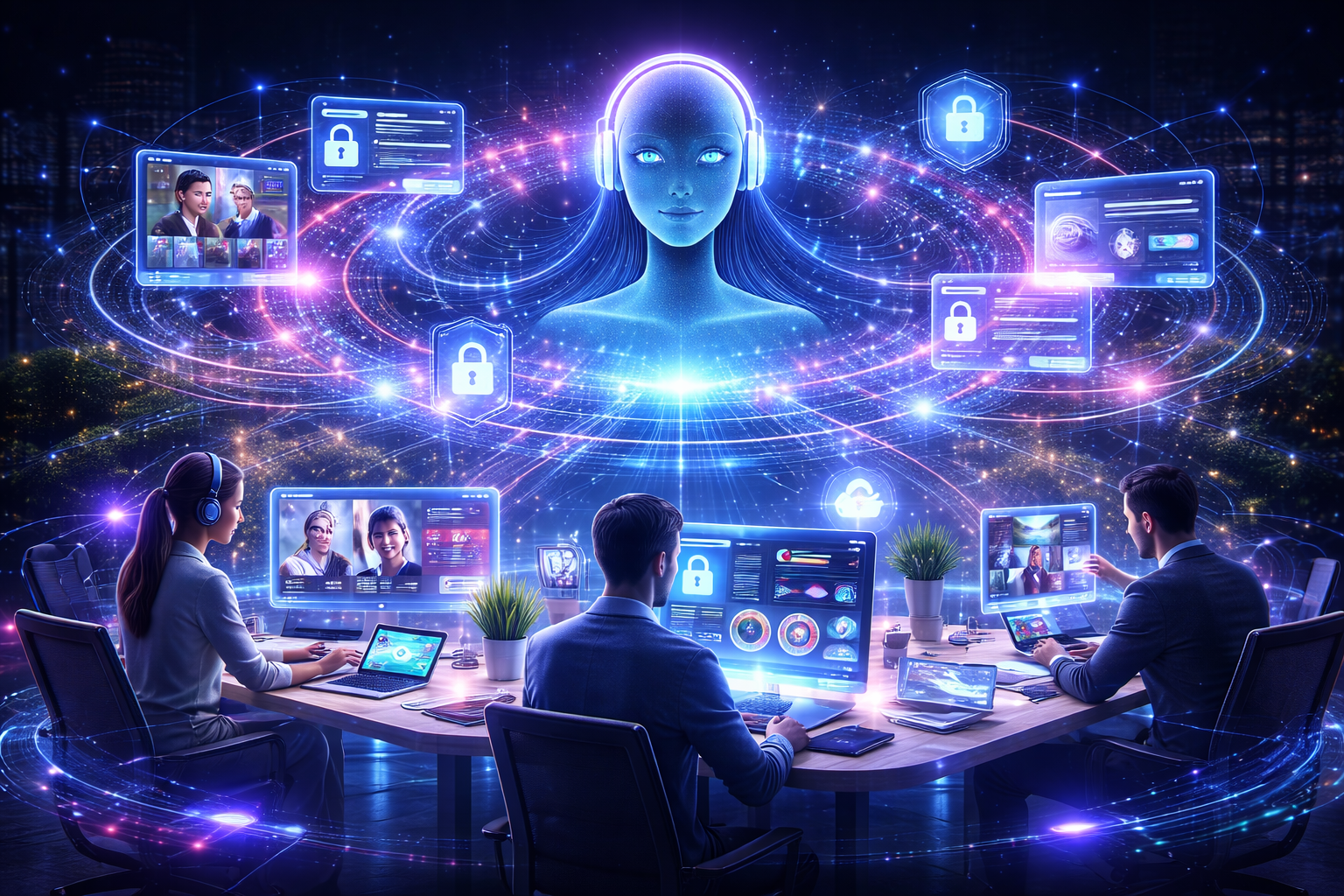
The workplace has transformed dramatically in recent years. What was once a physical space is now a digital-first environment where employees, machines, and systems collaborate seamlessly — regardless of geography or time zone.
At the heart of this transformation lies Connected Intelligence — the convergence of Artificial Intelligence (AI), cloud computing, and real-time collaboration tools that power the new hybrid work era.
As businesses adapt to remote and hybrid models, connected intelligence ensures not just connectivity but smart connectivity — enabling systems to learn, adapt, and collaborate alongside humans.
What Is Connected Intelligence?
Connected Intelligence refers to an AI-driven ecosystem where data, devices, and humans work together intelligently across networks.
It combines:
-
AI (for predictive insights and automation)
-
Cloud & Edge Computing (for real-time access)
-
IoT (for connected devices)
-
Collaborative Platforms (for communication and workflow)
Together, these elements create an adaptive digital environment where work happens fluidly, securely, and intelligently — anywhere in the world.
Unlike traditional digital workplaces that simply connect people through the internet, connected ecosystems actively analyze data and context to optimize productivity, security, and experience.
The Rise of the Hybrid Work Model
Hybrid work — a blend of on-site and remote collaboration — became mainstream after the global pandemic. But maintaining productivity, communication, and culture in distributed teams remains a major challenge.
This is where AI-powered connected ecosystems step in.
From smart meeting assistants that summarize discussions to AI-driven project dashboards that predict workflow bottlenecks, connected intelligence helps teams collaborate more efficiently and make faster, data-informed decisions.
Companies like Microsoft, Google, and Zoom Video Communications are already integrating AI deeply into hybrid work tools — making collaboration more human and context-aware.
How AI Is Powering Connected Work Ecosystems
1. Intelligent Collaboration Platforms
Modern collaboration tools like Microsoft 365 Copilot, Google Workspace Duet AI, and Slack Technologies GPT analyze messages, documents, and tasks to:
-
Draft responses and summaries
-
Schedule meetings intelligently
-
Prioritize conversations based on urgency
-
Extract action items automatically
AI doesn’t just assist — it actively participates in collaboration.
2. Predictive Decision-Making
In connected ecosystems, AI aggregates data from multiple sources — emails, CRM systems, IoT devices — to deliver predictive insights.
For example:
-
A sales dashboard that forecasts customer churn
-
A logistics app that predicts supply chain delays
-
A HR system that identifies employee burnout risk
This real-time intelligence turns raw data into actionable foresight, helping leaders make smarter, faster decisions.
3. Seamless Device Interconnectivity
Connected intelligence extends beyond laptops and phones.
Smart devices — from wearables to digital whiteboards — now sync through edge AI to support hybrid collaboration.
Imagine a team brainstorming in different time zones using AR/VR workspaces that simulate real offices. AI manages everything — from participant focus tracking to note-taking — enhancing engagement and reducing friction.
4. Security and Data Governance
With hybrid work expanding across multiple networks, AI-driven cybersecurity becomes crucial.
Connected ecosystems now include:
-
Behavioral AI to detect anomalies in user activity
-
Adaptive access control that adjusts permissions dynamically
-
Real-time threat prediction using global data patterns
AI transforms security from reactive to proactive defense, ensuring business continuity even in distributed environments.
Benefits of Connected Intelligence in Hybrid Work
-
Improved Collaboration
Teams can co-create in real time, regardless of geography. AI tools like smart transcription and automatic language translation eliminate barriers. -
Higher Productivity
Intelligent automation reduces repetitive tasks — from scheduling to reporting — freeing teams to focus on creativity and strategy. -
Enhanced Employee Experience
Personalized dashboards, mental health analytics, and workload balancing help create more human-centered work environments. -
Data-Driven Culture
Connected ecosystems empower every employee — not just analysts — to make decisions backed by data. -
Agility and Innovation
With real-time insights, companies can pivot quickly, adapting to market changes without disruption.
Challenges: Balancing Connectivity and Privacy
While connected intelligence brings immense benefits, it also raises data privacy and trust concerns.
Continuous data collection across platforms means:
-
Sensitive employee data can be exposed
-
AI systems may develop biases in performance tracking
-
Constant monitoring can affect employee morale
Organizations must therefore adopt ethical AI frameworks, clear privacy policies, and transparent data practices.
Regulations like the General Data Protection Regulation (GDPR), California Consumer Privacy Act (CCPA), and India’s Digital Personal Data Protection Act (DPDPA) are crucial in ensuring responsible AI adoption in workplaces.
The Future of Connected Work Ecosystems
The next wave of hybrid work will be powered by autonomous AI agents — digital coworkers that manage workflows, draft reports, and even negotiate meetings.
With OpenAI’s ChatGPT Team and Anthropic’s Claude Team, organizations can build private, secure, AI-powered knowledge bases.
In addition, multi-agent systems will connect HR, sales, marketing, and operations data streams — enabling truly self-learning organizations.
The goal? To move beyond digital connection toward digital consciousness, where systems understand context, emotion, and human intent.
Conclusion
Connected intelligence is redefining what it means to “go to work.” It’s not about physical offices or remote tools — it’s about creating an intelligent, adaptive ecosystem where humans and machines collaborate seamlessly.
In the coming years, the most successful organizations will be those that don’t just use AI, but integrate it across every workflow, device, and decision.
The hybrid work revolution isn’t just about flexibility — it’s about intelligence, empathy, and connected innovation.