
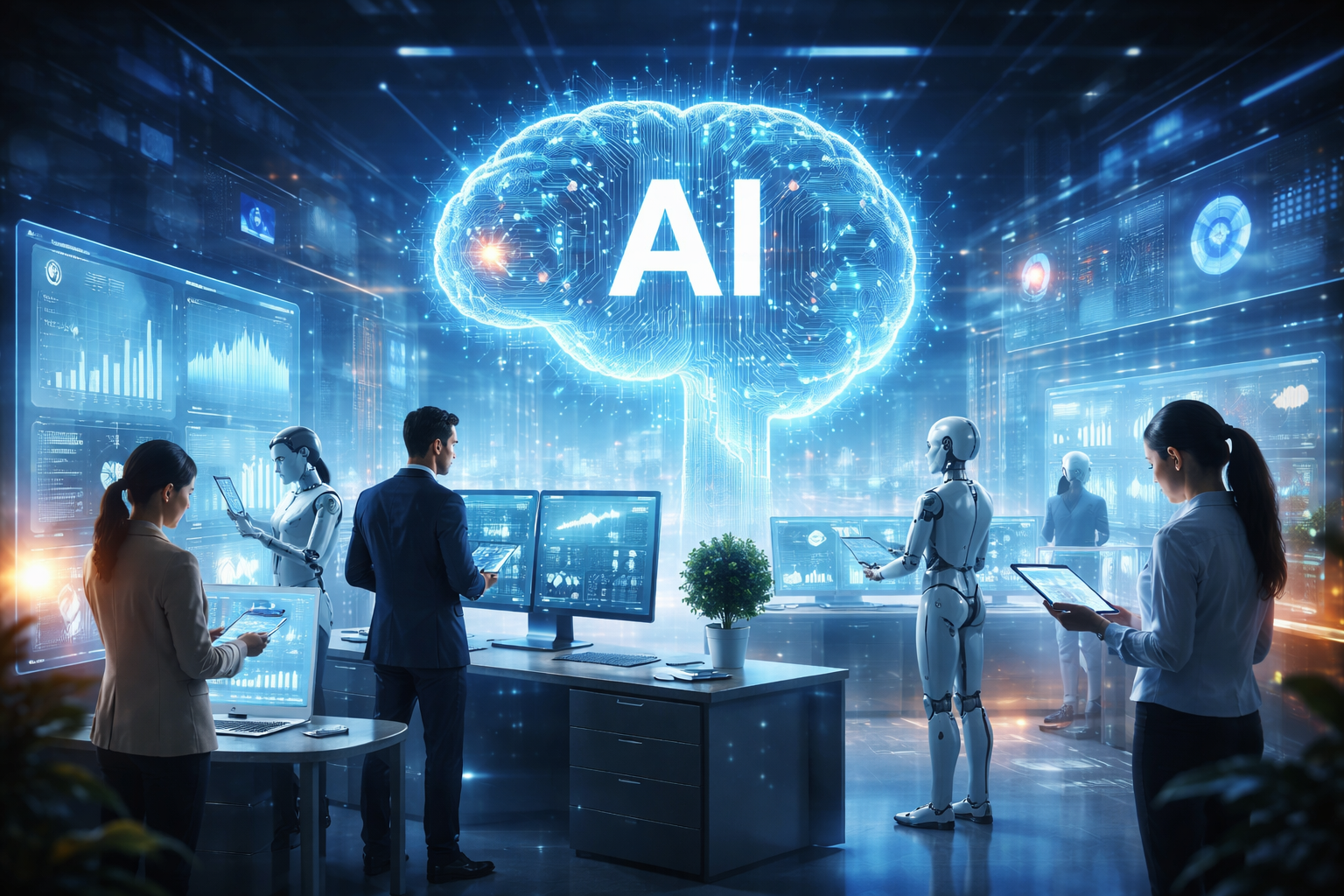
For years, Artificial Intelligence (AI) was surrounded by hype — futuristic promises, bold claims, and endless debates about what it could achieve. But as we step into 2026, that hype has finally evolved into measurable results. AI is no longer a distant dream or an experiment in innovation labs; it has become a central force reshaping how businesses operate, make decisions, and grow. From automation and analytics to creative design and customer service, AI is now a true business partner rather than a supporting tool.
AI Becomes a Strategic Core
Businesses across industries are embedding AI directly into their strategies rather than treating it as an optional upgrade. Instead of asking “Should we use AI?” companies now ask “How can AI improve our core operations?” Whether it’s forecasting demand, optimizing logistics, or personalizing user experiences, AI is improving accuracy and reducing costs. Retailers use AI to predict what products will trend, while manufacturers rely on predictive maintenance to prevent costly breakdowns. The focus has shifted from experiments to execution.
Real-World Results and ROI
The biggest change is in the bottom line. Companies are now seeing measurable financial returns from AI investments. According to recent global reports, AI-driven organizations are achieving faster decision-making, better customer retention, and higher productivity. Automated workflows powered by machine learning are saving thousands of work hours every month. In finance, AI is detecting fraud in real-time, while healthcare systems use it to speed up diagnosis and patient care. These are not pilot projects anymore — they are business-critical systems delivering consistent results.
AI Governance and Trust
As AI becomes more powerful, companies are also learning that success depends on trust. Ethical AI frameworks, transparency, and data responsibility are now essential. Businesses are setting up AI governance boards to ensure fairness and accountability. The goal is to balance automation with human judgment, preventing biases and ensuring AI acts as a responsible advisor. This maturity in AI deployment marks a turning point — organizations understand that trust is just as important as technology.
From Tools to Teammates
AI is evolving from a set of algorithms into intelligent assistants that collaborate with humans. These AI “agents” can summarize meetings, write content, analyze trends, and even suggest decisions based on live data. In many companies, AI now handles repetitive work, freeing employees to focus on creativity, innovation, and strategy. Rather than replacing workers, AI is redefining what productivity means — helping people do more in less time and with better accuracy.
The Road Ahead
The journey from hype to impact shows that AI’s real power lies in integration, not imagination. The next phase will see AI seamlessly woven into every digital system, becoming as common as electricity or the internet. Businesses that understand how to align AI with their goals will lead the next decade of innovation.
In short, AI has graduated from being a buzzword to becoming a measurable driver of progress — and it’s transforming the way the world works, one intelligent decision at a time.