
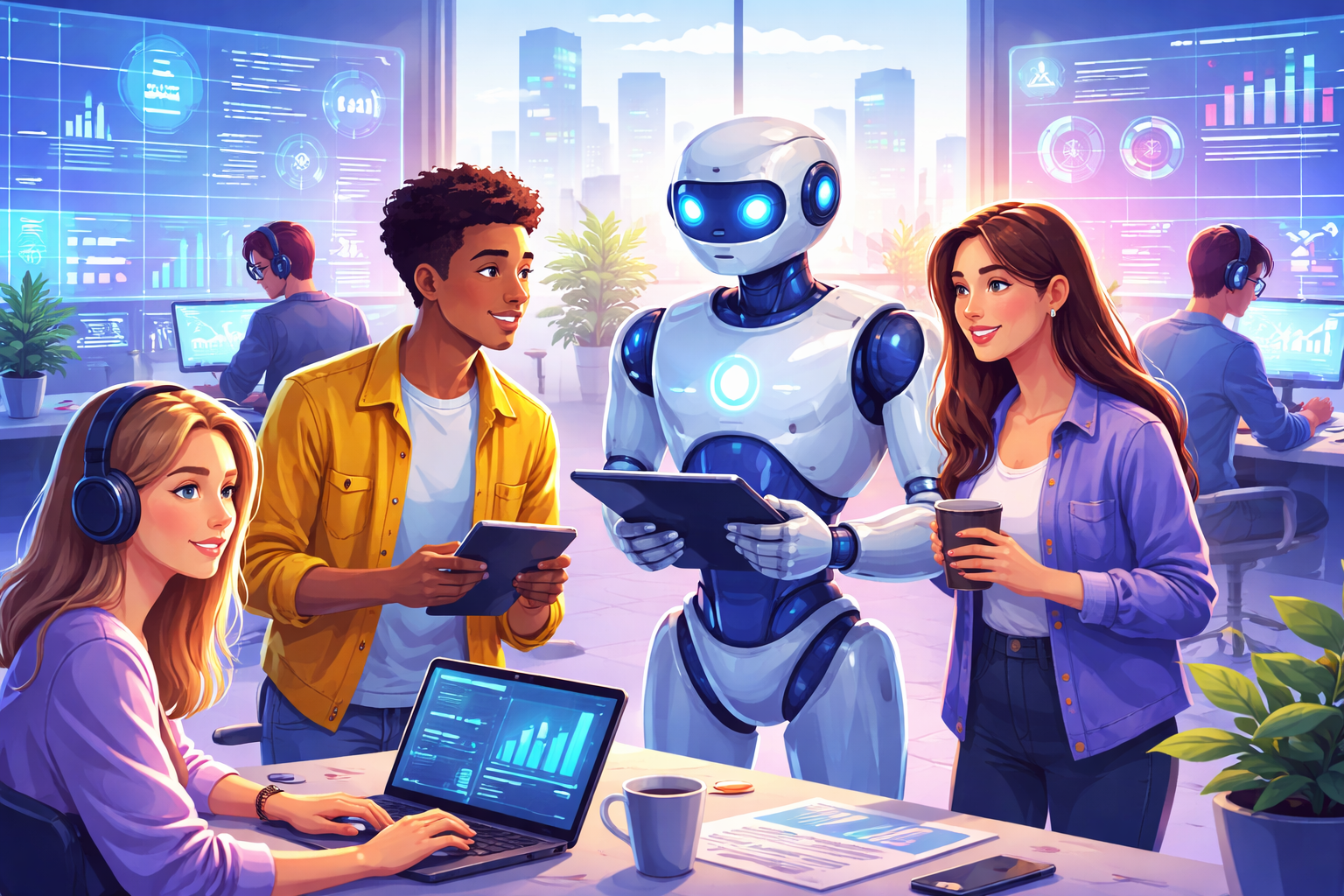
As Artificial Intelligence (AI) continues to redefine workplaces, a new generation is standing at the crossroads of innovation and anxiety — Gen Z. Born between the mid-1990s and early 2010s, Gen Z has grown up with technology at their fingertips. From smartphones to social media to ChatGPT, they’ve witnessed digital evolution in real time. But now, as AI enters offices and industries, this tech-savvy generation faces both unprecedented opportunities and fresh challenges.
AI: The Double-Edged Tool of the Future
For Gen Z professionals entering the workforce, AI is not just a buzzword — it’s a daily reality. They use AI tools to brainstorm ideas, automate tasks, generate reports, and enhance creativity. Whether it’s designers using generative AI for visuals, marketers using chatbots for customer support, or coders using AI-assisted development platforms, this generation knows how to make technology work smarter.
However, the same technology that empowers them also sparks concern. Many fear that automation could replace entry-level jobs or limit growth opportunities. According to recent workplace surveys, over 60% of Gen Z employees believe AI could “significantly change” their career paths — and not all of them are sure that’s a good thing.
From Fear to Fluency: Adapting to the AI Wave
Unlike older generations who often resist digital disruption, Gen Z tends to adapt quickly. They don’t see AI as a rival but as a co-worker. Their comfort with learning new platforms gives them an edge in hybrid workplaces where AI integration is inevitable. Instead of worrying about job loss, many are focusing on developing complementary skills — emotional intelligence, creativity, and critical thinking — that AI can’t replicate.
Forward-thinking organizations are now leveraging this adaptability. Companies that encourage AI training and experimentation among younger employees are finding Gen Z to be powerful innovation drivers. They bring a fresh mindset that bridges human insight with machine intelligence.
AI Ethics and Digital Responsibility
Gen Z isn’t just using AI — they’re questioning it. They demand transparency, data privacy, and ethical AI practices from employers. Many young professionals prefer working with companies that align with their values, especially when it comes to responsible tech usage. This moral awareness could shape the next decade of corporate ethics and technology policy.
For businesses, this presents both a challenge and an opportunity. They must not only implement AI efficiently but also communicate clearly about how it’s used — ensuring it enhances human potential rather than undermining it.
The Road Ahead: Humans and Machines, Together
As we move deeper into 2026 and beyond, the relationship between Gen Z and AI will evolve into one of symbiotic collaboration. AI will handle repetitive, data-heavy tasks, while Gen Z will focus on innovation, design, and strategic thinking. In this new ecosystem, success won’t be about humans versus machines — it will be about humans empowered by machines.
Ultimately, Gen Z’s open-mindedness, tech fluency, and ethical vision are shaping the future of work — one where AI becomes not a threat but a trusted teammate.