
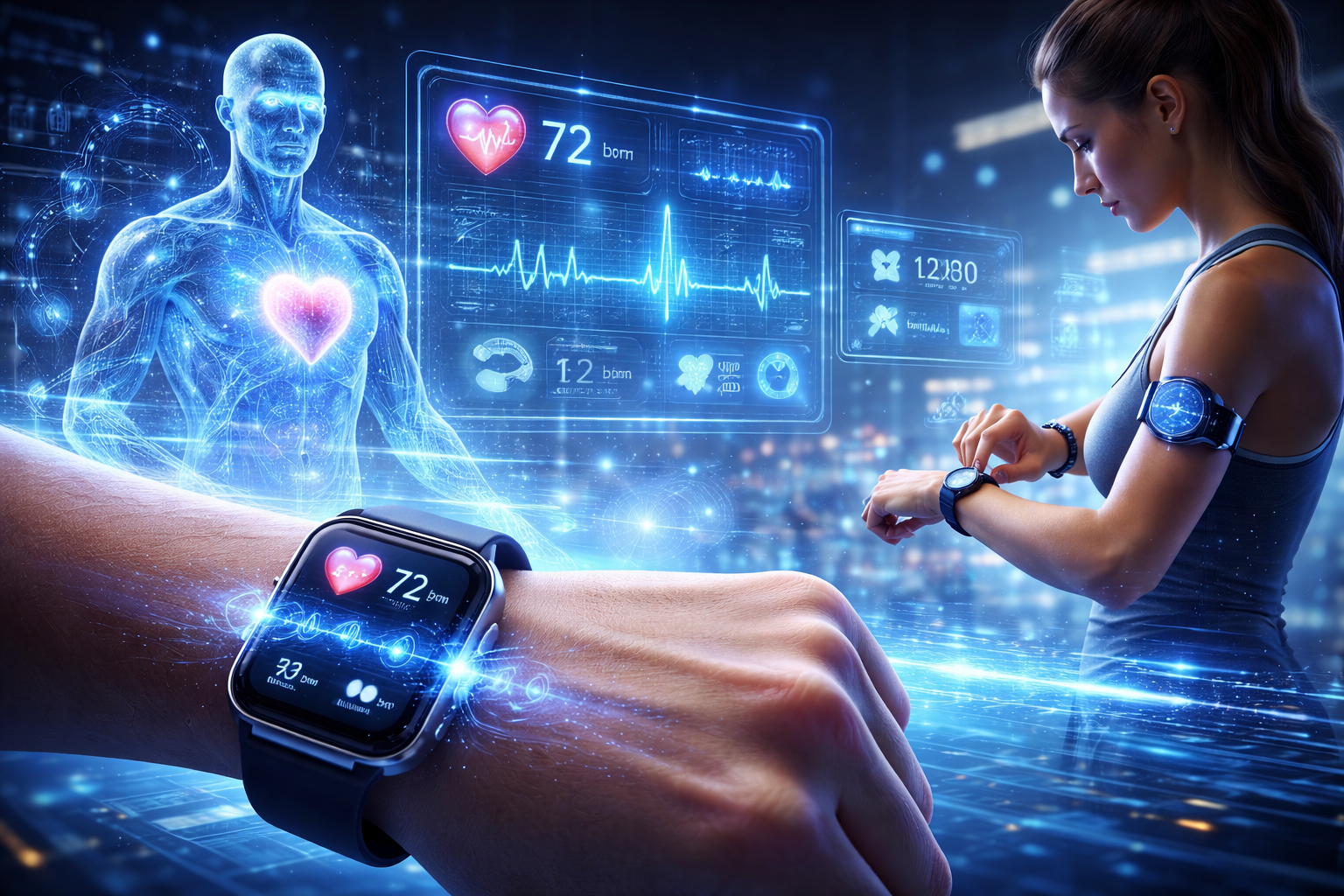
The healthcare industry is undergoing a digital revolution — one powered by Artificial Intelligence (AI) and wearable technology. What was once a sector defined by hospital visits and reactive treatments has now evolved into a proactive, data-driven ecosystem. In 2026, the convergence of AI and wearables is helping people live healthier, longer, and more informed lives. From early disease detection to real-time monitoring, this powerful combination is reshaping the future of healthcare.
1. From Reactive to Predictive Healthcare
Traditionally, healthcare focused on treating illnesses after symptoms appeared. But with the help of AI-powered wearables, that approach is changing. Today’s smart devices — watches, fitness bands, and even clothing — constantly track vital signs like heart rate, oxygen levels, sleep patterns, and body temperature.
When combined with AI algorithms, this data enables predictive healthcare. For example, AI can detect subtle changes in a person’s heartbeat that might indicate an early sign of arrhythmia or cardiac stress — alerting the user and their doctor before a major issue arises. This shift from reactive to preventive care is saving lives while reducing hospital costs.
2. AI-Powered Diagnostics and Personalized Insights
AI is not only improving how data is collected but also how it’s analyzed. Advanced AI models can process vast amounts of medical information in seconds, identifying patterns that even trained professionals might miss.
Wearable devices now come equipped with AI-driven diagnostic tools, capable of analyzing data and offering personalized recommendations. For instance, AI can suggest lifestyle changes to improve sleep quality, provide reminders for medication, or alert users to potential respiratory issues.
This new wave of personalized healthcare ensures that treatment and prevention strategies are tailored to each individual’s unique biological profile — making medicine more accurate, accessible, and efficient.
3. Remote Monitoring and Telehealth Integration
The COVID-19 pandemic accelerated the adoption of telehealth, and wearables have made remote care even more effective. Patients with chronic conditions such as diabetes, hypertension, or heart disease can now be monitored continuously without needing to visit hospitals.
Doctors receive real-time health data, allowing them to make timely interventions and adjust treatment plans remotely. This has been especially valuable in rural areas where access to healthcare is limited.
The result is a seamless, AI-integrated healthcare ecosystem, where data from wearable devices flows directly to medical platforms, creating a complete digital health profile for each patient.
4. The Future of HealthTech: Smarter, Smaller, and More Secure
As technology evolves, wearables are becoming more compact, accurate, and secure. Future innovations include smart contact lenses that monitor glucose levels, AI-powered patches that track hydration and stress, and biometric sensors capable of detecting infections before symptoms appear.
At the same time, data security remains a top priority. Developers are implementing blockchain-based encryption and secure data-sharing protocols to protect user privacy and ensure that personal health information remains confidential.
Conclusion
AI and wearables are more than just tools — they represent a fundamental shift toward personalized, connected, and intelligent healthcare. By combining real-time data collection with advanced AI analytics, HealthTech is empowering individuals to take control of their well-being like never before.
In this new era of smart healthcare, technology doesn’t just treat illness — it prevents it, transforming how we understand and manage our health in 2026 and beyond.