
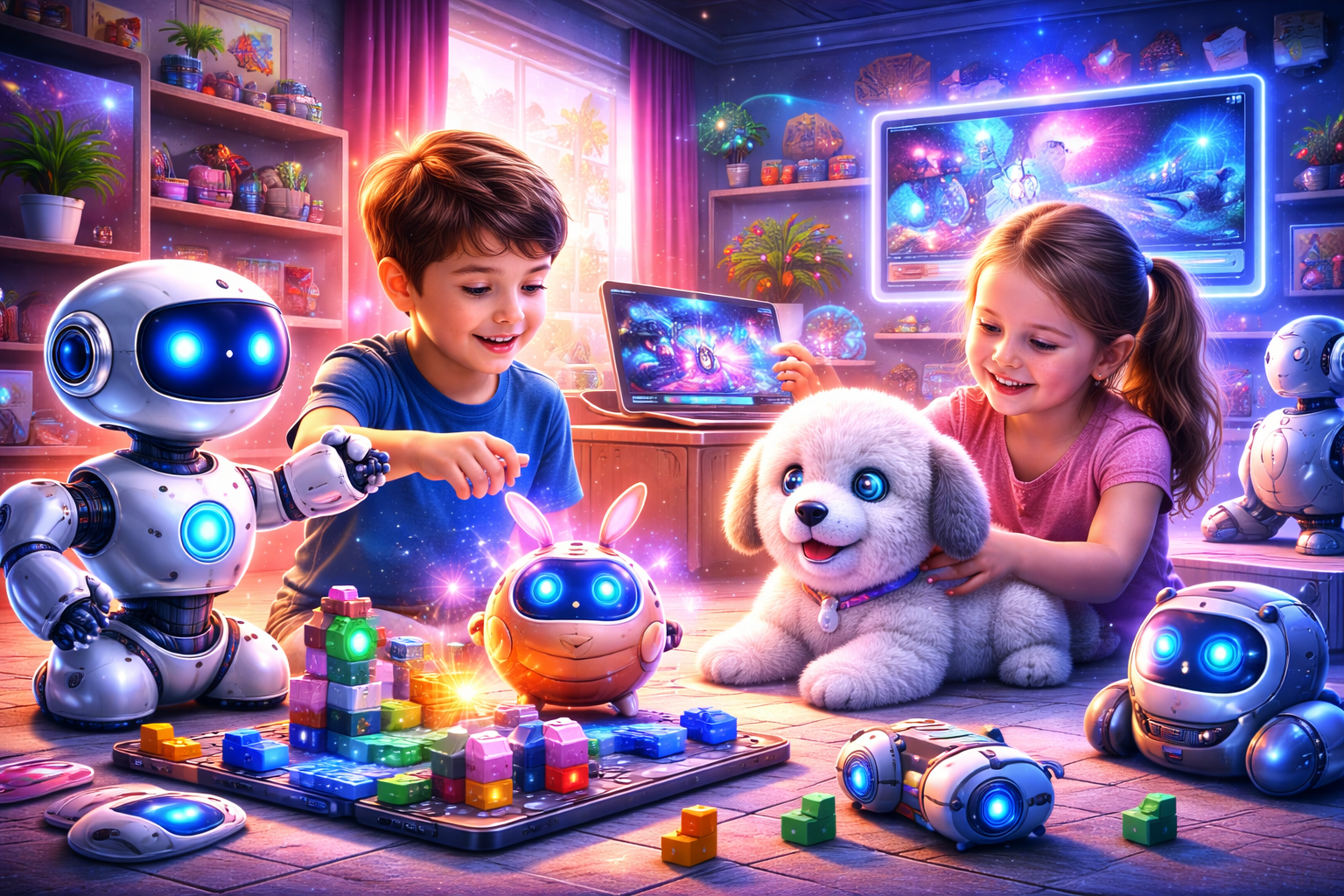
The world of toys has changed forever. What once relied on imagination and simple mechanics has now merged with artificial intelligence, sensors, and connectivity. In 2026, interactive toys are no longer just playthings — they are companions, teachers, and creative partners. From smart LEGO bricks to voice-responsive robots, the toy industry is entering a new era that blends fun with learning and emotional connection.
1. AI-Powered Companions
One of the most fascinating advancements in the toy industry is the rise of AI-powered companions. These are toys that not only respond to commands but also learn from interactions. They can recognize voices, remember preferences, and even adapt their behavior over time.
Companies like LEGO, Mattel, and Hasbro are leading the movement by embedding AI modules into their toys. Kids can now play with dolls that understand emotion or robots that adjust their responses based on the child’s tone or learning pace. This creates a personalized experience that grows with the child, making play more engaging and educational.
2. Smart Building Sets and Augmented Reality Play
Interactive play has gone beyond the screen — and into reality. The latest smart building sets combine physical play with digital interactivity. For instance, LEGO’s new Smart Play System merges traditional bricks with sensors, lights, and motion tracking, allowing children to bring their creations to life.
With augmented reality (AR) integration, kids can scan their builds using a mobile app and see them animate on screen — battling, dancing, or exploring a virtual world. These toys bridge creativity and technology, helping children develop problem-solving and engineering skills in a fun way.
3. Educational Robots for Young Innovators
Educational robots have become one of the fastest-growing categories in interactive toys. Devices like Cozmo, Sphero BOLT, and Miko 4 are designed to teach children coding, logic, and even emotional intelligence. They use gamified lessons to make learning enjoyable.
In 2026, new models feature AI voice assistants, facial recognition, and gesture control, making them feel more like friends than machines. Parents love them because they blend entertainment with STEM education, helping kids learn the skills of tomorrow while having fun today.
4. Voice and Touch Integration
The next-gen interactive toys also focus on multisensory experiences. Many come equipped with voice recognition, gesture control, and touch sensors. This makes playtime immersive — toys respond to hugs, high-fives, or verbal praise.
For example, plush AI pets can express happiness when petted or “sleep” when ignored, mimicking real emotional responses. This not only entertains children but also encourages empathy, patience, and social interaction.
5. Safer, Smarter Connectivity
As toys become more connected, privacy and security have become top priorities. Manufacturers are now using secure cloud systems and parental control apps to monitor toy interactions safely. Parents can set limits, review activity logs, and control connectivity features with ease.
This responsible approach ensures that technology enhances play without compromising safety or privacy — a crucial step as toys become part of the connected home ecosystem.
Conclusion
Interactive toys in 2026 redefine what it means to play. They are intelligent, responsive, and educational — turning playtime into a blend of creativity, learning, and emotional growth. From AI companions to AR-powered building sets, the future of toys is not just about fun — it’s about inspiring the next generation of thinkers, makers, and dreamers.