
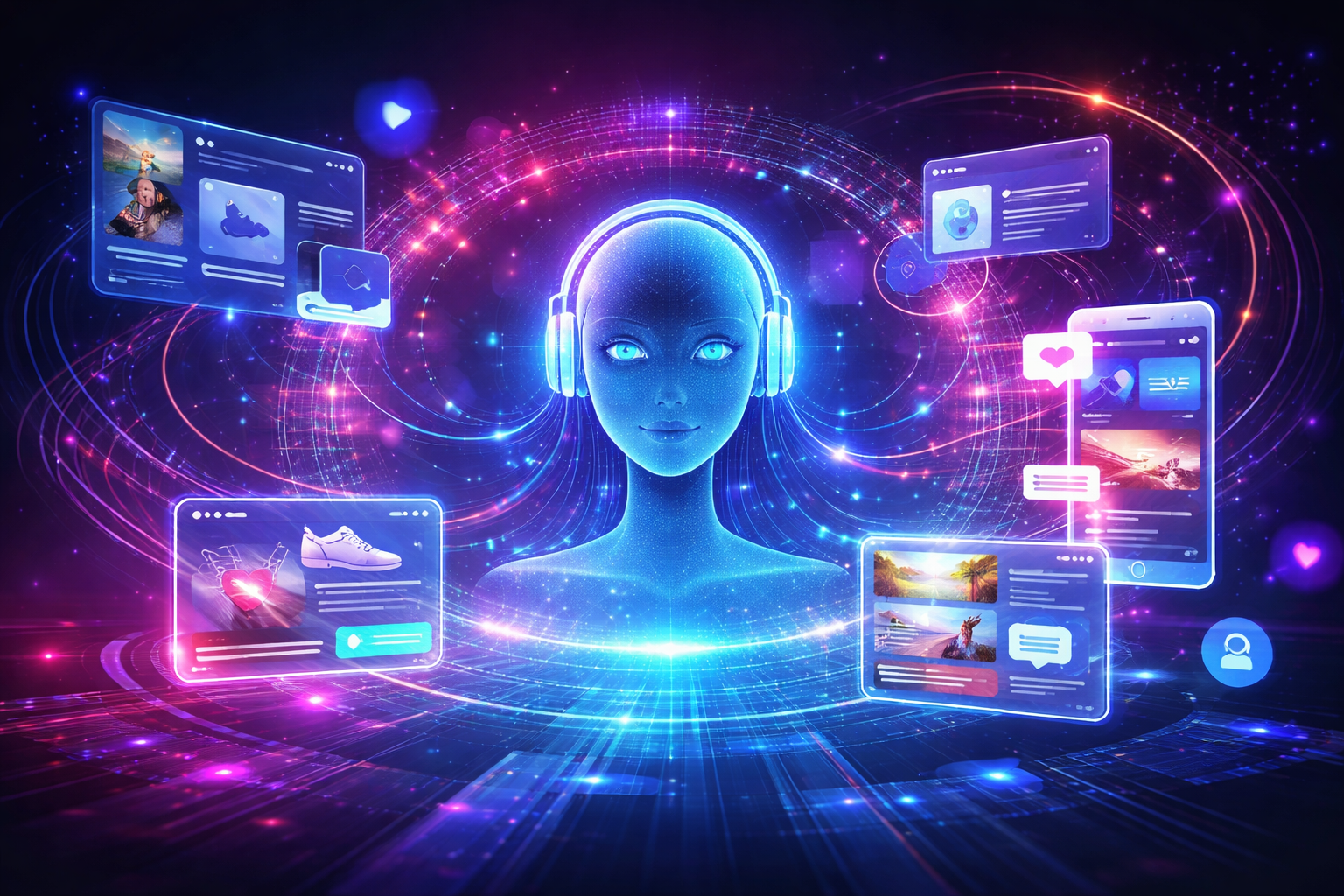
In today’s digital world, personalization has become more than a marketing strategy—it’s an expectation. Whether it’s shopping online, streaming music, or browsing social media, users want experiences that feel uniquely designed for them. Behind this revolution lies Artificial Intelligence (AI)—the silent engine analyzing our behaviors, preferences, and emotions to deliver real-time, personalized experiences.
The Shift from Generic to Personalized
In the early days of the internet, everyone saw the same ads, product recommendations, and content. Businesses relied on broad demographic data—age, location, and gender—to make marketing decisions. But this “one-size-fits-all” approach quickly became obsolete as users demanded more relevant, engaging experiences.
With AI’s ability to process vast amounts of data instantly, personalization moved from a manual process to a real-time adaptive system. Today, algorithms can predict what users want even before they know it themselves—creating a seamless and hyper-personalized digital journey.
How AI Personalization Works
AI-driven personalization relies on a combination of machine learning, natural language processing (NLP), and predictive analytics. These technologies work together to understand user behavior across multiple touchpoints—websites, apps, emails, voice assistants, and even IoT devices.
Here’s how it typically works:
-
Data Collection: AI systems gather information about users’ actions—what they click, watch, buy, or ignore.
-
Behavioral Analysis: The data is analyzed to detect patterns and preferences. For instance, if a user repeatedly searches for fitness gear, AI identifies them as health-conscious.
-
Real-Time Adaptation: Based on these insights, AI modifies what the user sees—showing workout videos, suggesting healthy recipes, or recommending running shoes.
-
Continuous Learning: The more the user interacts, the smarter the AI becomes. Each action fine-tunes future recommendations.
This continuous feedback loop allows brands to adapt instantly—no human intervention required.
Personalization in Action: Real-World Examples
-
E-commerce: Platforms like Amazon and Flipkart use AI to recommend products tailored to each user’s search history, price sensitivity, and even time of day. These personalized recommendations can boost sales by up to 30%.
-
Streaming Services: Netflix and Spotify rely on machine learning algorithms that analyze watch or listening history to curate personalized playlists and movie suggestions—keeping users engaged for longer periods.
-
Advertising: AI enables programmatic advertising, where ads are shown to the right audience at the right moment. By analyzing real-time behavior, AI decides whether to display an ad, which format to use, and how to bid for that impression.
-
Customer Service: ChatGPT-powered chatbots provide instant, context-aware support by understanding past interactions, preferences, and even tone, making users feel heard and valued.
The Role of Predictive AI
Predictive AI takes personalization a step further. Instead of just reacting to user behavior, it anticipates what users might do next. For example:
-
A travel app can predict when you’re likely to plan your next vacation based on previous bookings.
-
An e-commerce store can send reminders for products that typically need replenishment.
-
A fitness app can adapt workouts based on your energy levels and sleep data.
Predictive models turn ordinary interactions into proactive experiences, building stronger relationships between brands and users.
Benefits of Real-Time AI Personalization
-
Enhanced User Engagement: When users see relevant content, they’re more likely to stay, click, and buy. Personalization reduces bounce rates and boosts conversions.
-
Increased Customer Loyalty: AI-driven experiences make users feel understood. This emotional connection translates into long-term brand loyalty.
-
Higher Marketing ROI: Instead of spending on broad, ineffective campaigns, companies can target the right customers at the right time with precision.
-
Dynamic Adaptability: AI continuously evolves. It learns from every interaction, allowing businesses to adapt to market changes instantly.
Ethical Challenges and Data Privacy
While personalized AI experiences are powerful, they also raise ethical and privacy concerns. How much data should companies collect? How transparent should algorithms be? Misuse of personal information can lead to distrust and legal challenges.
To address this, global regulations like the General Data Protection Regulation (GDPR) and California Consumer Privacy Act (CCPA) emphasize user consent, data transparency, and the right to be forgotten. Responsible AI systems must ensure fairness, accountability, and explainability.
The future of personalization depends on balancing innovation with user trust. Ethical AI isn’t just a compliance requirement—it’s a brand differentiator.
Future of Personalized AI Experiences
The next generation of AI personalization will be powered by multi-modal AI—systems that understand text, voice, video, and emotion simultaneously. Imagine a digital assistant that senses your mood through tone and facial expressions and adjusts responses accordingly.
With advances in edge computing and on-device AI, personalization will become more private and faster, eliminating the need to send sensitive data to the cloud.
Moreover, as AI agents become more autonomous, users will have digital companions that manage tasks, purchases, and recommendations on their behalf—learning continuously from their preferences.
Conclusion
AI personalization is reshaping how businesses connect with their audiences. From real-time product recommendations to emotion-aware assistants, it’s redefining digital interaction as something human, intuitive, and adaptive.
However, as AI gets smarter, companies must ensure that personalization remains respectful, transparent, and ethical. The future belongs to brands that can create experiences that feel not just personal—but genuinely human.