


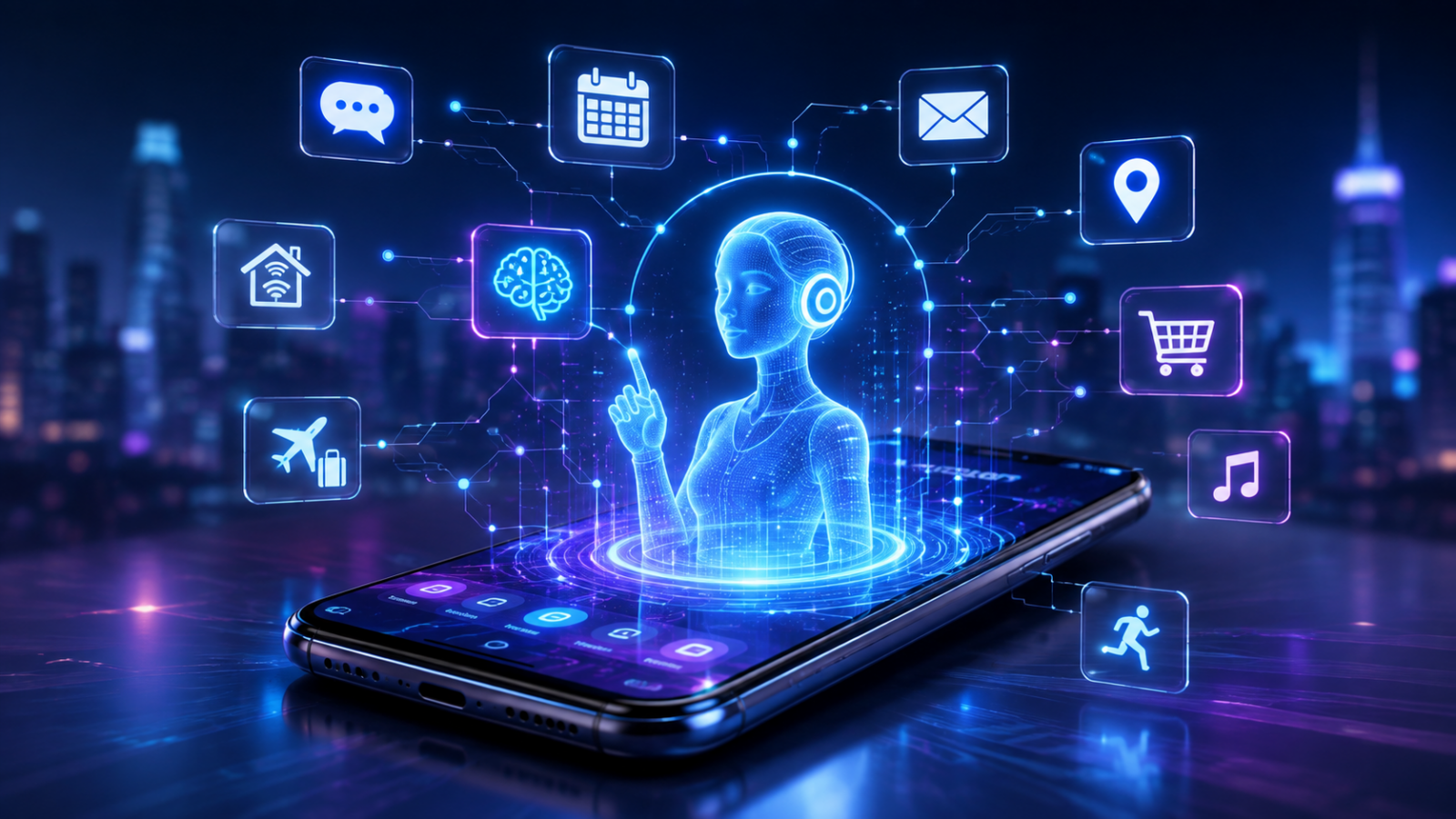
Artificial intelligence is no longer just a feature added to smartphones—it’s becoming the foundation of the entire mobile experience. In 2026, a new generation of AI-first smartphones is changing how people interact with their devices. Instead of opening separate apps for every task, users can now rely on intelligent AI agents that understand natural language, complete multi-step actions, and automate daily activities.
This shift represents one of the biggest changes in mobile technology since the introduction of app stores. Rather than tapping through multiple applications, users simply tell their phone what they want, and the AI handles the rest.
In this article, we’ll explore what AI-first smartphones are, how AI agents work, why they may eventually replace traditional mobile apps, and what this means for consumers and developers.
What Is an AI-First Smartphone?
An AI-first smartphone is designed with artificial intelligence at its core. Unlike traditional smartphones, where AI is used only for camera enhancements or voice assistants, AI-first devices integrate AI into nearly every aspect of the user experience.
These phones can:
- Understand natural conversations
- Predict user needs
- Automate repetitive tasks
- Manage schedules
- Book services
- Summarize emails
- Generate content
- Translate conversations instantly
- Control apps without manual interaction
Instead of acting like a simple assistant, the AI becomes your personal digital operator.
What Are AI Agents?
AI agents are intelligent software systems capable of planning, reasoning, and completing tasks independently.
Unlike traditional voice assistants that respond to one command at a time, AI agents can:
- Understand context
- Remember previous conversations
- Perform multiple actions
- Make decisions
- Interact with multiple applications
- Complete entire workflows automatically
For example, instead of saying:
“Open Maps.”
You can simply say:
“Book a table at an Italian restaurant near my office at 7 PM, invite Rahul, and navigate me there after work.”
The AI agent performs all these steps without requiring you to switch between apps.
Why Mobile Apps May Become Less Important
Traditional smartphones require users to manually navigate through dozens of applications.
Typical workflow:
- Open Calendar
- Check schedule
- Open Maps
- Find location
- Open Messaging
- Invite friends
- Open Food App
- Reserve table
With AI agents:
You simply describe your goal once.
The AI decides which services to use behind the scenes.
This creates a much faster and more natural user experience.
Key Features of AI-First Smartphones
1. Natural Language Control
Users can communicate with their phone as they would with another person.
Example:
“Plan my entire business trip for next Tuesday.”
The AI can:
- Book flights
- Reserve hotels
- Schedule meetings
- Create reminders
- Generate travel itineraries
2. Cross-App Automation
AI agents can work across multiple services simultaneously.
Instead of opening five different apps, the AI handles everything in one request.
3. Personalized Recommendations
AI studies your daily habits to suggest:
- Travel routes
- Meal options
- Shopping recommendations
- Fitness routines
- Work schedules
The longer you use the phone, the smarter it becomes.
4. Smarter Search
Instead of searching keywords, users ask complete questions.
Example:
“Show me the cheapest direct flight to Dubai next month.”
The AI understands intent rather than keywords.
5. AI Camera Intelligence
Modern AI-first smartphones improve photography through:
- Scene recognition
- Automatic editing
- Background removal
- Object detection
- Real-time translation
- Video enhancement
Benefits of AI-First Smartphones
Saves Time
Tasks that previously took several minutes can now be completed in seconds.
Better Productivity
AI automates repetitive work including:
- Email drafting
- Meeting summaries
- Calendar management
- Reminder creation
Easier for Beginners
Users no longer need to learn complex interfaces.
Simply ask the phone what you want.
Improved Accessibility
Voice-driven interaction makes smartphones easier for elderly users and people with disabilities.
Challenges and Concerns
While AI-first smartphones offer many benefits, several challenges remain.
Privacy
AI agents often need access to messages, calendars, contacts, and location data. Strong privacy controls and transparent permissions are essential.
Accuracy
AI may occasionally misunderstand requests or produce incorrect results. Users should review important actions before they are finalized.
Internet Dependence
Some advanced AI features rely on cloud processing. Devices with powerful on-device AI chips can reduce this dependency, but connectivity still matters for many tasks.
Security
Because AI agents can access multiple services, protecting accounts with strong authentication and regular software updates becomes even more important.
Impact on App Developers
The rise of AI-first smartphones is changing how developers design software.
Instead of building isolated app experiences, developers are increasingly exposing features through APIs that AI agents can access directly. This shift encourages:
- Better interoperability
- Faster task automation
- More conversational interfaces
- Personalized user experiences
Developers who adapt to AI-driven ecosystems are likely to benefit as user behavior evolves.
The Future of Smartphones
Over the next few years, smartphones are expected to become less app-centric and more intent-driven. Rather than deciding which app to open, users will simply express what they want to achieve.
Future AI-first phones may be able to:
- Plan complete vacations
- Manage personal finances
- Coordinate smart home devices
- Act as real-time translators
- Create documents and presentations
- Assist with coding and creative work
- Offer proactive health and productivity suggestions
Apps are unlikely to disappear entirely, but for many everyday tasks, they may operate behind the scenes while AI agents become the primary interface.
Conclusion
AI-first smartphones represent a major shift in mobile computing. By combining advanced language models, automation, and contextual understanding, AI agents are making technology more intuitive and efficient.
Instead of navigating dozens of apps, users can simply describe their goals and let AI coordinate the necessary actions. As hardware improves and on-device AI becomes more powerful, this approach is likely to define the next generation of smartphones.
Whether you’re a casual user, a business professional, or a developer, understanding AI-first smartphones today will help you prepare for the future of mobile technology.
Frequently Asked Questions
What is an AI-first smartphone?
An AI-first smartphone is a device where artificial intelligence is deeply integrated into the operating system, enabling conversational interaction, automation, and intelligent assistance across many tasks.
What are AI agents?
AI agents are software systems that can understand requests, plan multiple steps, and perform tasks across apps or services with minimal user input.
Will AI agents replace mobile apps?
AI agents are expected to reduce the need to manually open many apps for routine tasks, but specialized apps will still be important for gaming, creative work, and advanced professional use.
Are AI-first smartphones safe?
They can be safe when supported by strong privacy protections, on-device AI processing, encryption, and user-controlled permissions.