


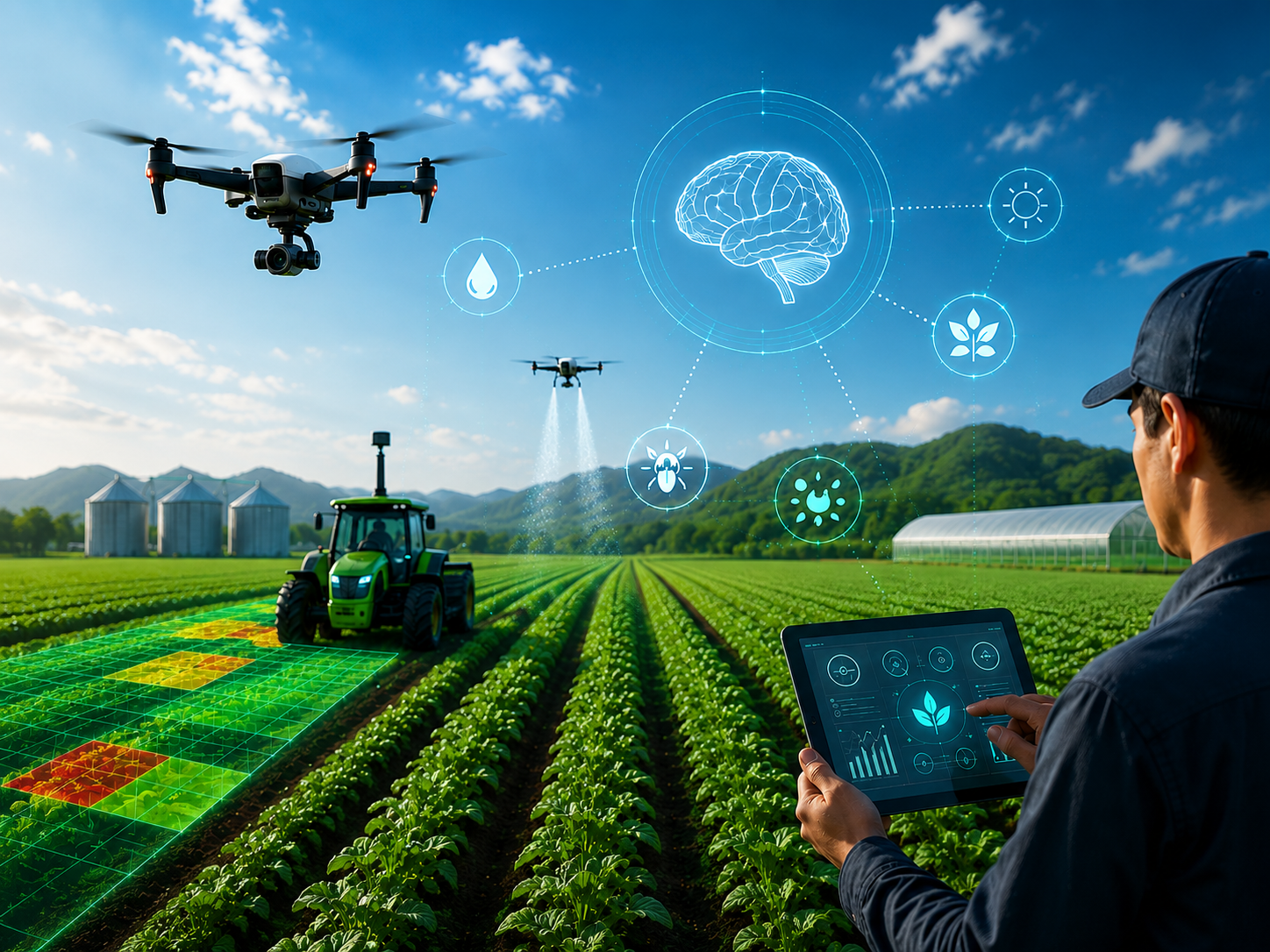
As the global population grows, food security and sustainable agriculture practices are critical. Surprisingly, Artificial Intelligence (AI) has emerged as a powerful tool revolutionizing another field. In agriculture, it addresses various issues farmers face and the industry. This is also why the global AI in agriculture market is speculated to reach the value of $4.7 billion by 2028, growing at a CAGR of 23.1%
AI technologies, such as machine learning and data analytics, offer innovative solutions to optimize farming processes and increase crop yields. Although, this must make you wonder how it caters to the agriculture sector. Therefore, this article will delve into how AI contributes to a more efficient and sustainable future for food production.
Top 10 Ways AI Can Help In Revolutionizing Agriculture
AI has the potential to revolutionize agriculture by optimizing various processes. Some of the ways the application of AI in agriculture can bring transformative changes are:
1. Precision Farming
AI-driven precision farming technologies use data from diverse sources to create detailed maps of fields. These sources can be satellite imagery, drones, and sensors. Such maps provide valuable insights into soil variability, moisture content, and crop health. Thus, with the help of this information, you can employ variable rate application techniques. It will allow you to apply the right amount of fertilizers and water to adequate areas, further optimizing resource usage and maximizing yields.
2. Crop Health Monitoring
AI-powered image recognition and machine learning algorithms analyze images of crops. Drones or cameras capture these images to detect early signs of diseases, nutrient deficiencies, and pest infestations. Therefore, you can promptly apply targeted treatments by identifying these issues at their initial stages. This will help you reduce potential crop losses and excessive chemical applications.
3. Autonomous Farming Machinery
AI in agriculture enables the development of autonomous robots and vehicles that can perform various agricultural tasks without human intervention. These tasks can be seeding, harvesting, and weeding. Such machines use sensors, GPS, and AI algorithms to navigate fields. This ensures precision and efficiency in operations while minimizing labor costs and errors.
4. Weather Prediction
AI’s ability to process vast amounts of weather data and historical patterns allows for accurate and localized weather forecasts. Thus, you can access real-time weather information customized to your location. This will allow you to make informed decisions about planting schedules and irrigation management.
5. Crop Yield Prediction
Artificial Intelligence algorithms can also predict crop yields for the upcoming season by analyzing historical data, weather patterns, and other relevant factors. This foresight enables you to prepare for future challenges and allocate your resources accordingly.
6. Soil Health Analysis
AI interprets soil data collected through sensors and assessments to evaluate fertility. Thus, it can provide you with tailored recommendations on optimal fertilization plans, crop rotation strategies, and soil amendments. This further encourages sustainable practices and long-term soil health.
7. Market Analysis and Price Forecasting
AI algorithms process vast amounts of market data to provide valuable insights into market fluctuations. This data includes global trade patterns and consumer behavior. Thus, you will be able to make informed choices about crop selection, pricing strategies, and market timing with the help of this knowledge..
8. Livestock Monitoring
AI-powered sensors and wearable devices monitor the health and behavior of livestock. These devices can track vital signs, activity levels, and feeding patterns, providing early detection of illnesses and stress. Thus you can administer targeted treatments and improve overall animal welfare by promptly identifying health issues.
9. Automated Irrigation Systems
AI-controlled irrigation systems analyze data from soil moisture sensors and weather forecasts to determine crop water requirements. Thus, AI can automatically adjust the systems’ irrigation schedules and deliver precise amounts of water to crops. This further conserves water resources and reduces energy costs.
10. Supply Chain Optimization
The application of artificial intelligence in business optimizes supply chains by analyzing transportation, storage, and distribution data. This allows them to streamline logistics, reducing food waste and ensuring fresh produce reaches consumers efficiently. It thereby contributes to food security and sustainability.
11. Crop Breeding and Genetics
Artificial Intelligence accelerates crop breeding by analyzing vast genetic datasets to identify desirable traits. It guides geneticists in selecting and breeding plants with improved resistance to diseases, pests, and adverse environmental conditions. This leads to the development of more resilient and high-yielding crop varieties.
12. Pest and Disease Management
AI helps in the early identification and tracking of pests and diseases using data from sensors, drones, and satellite imagery. Thus, it empowers you to respond swiftly and effectively to outbreaks by providing real-time alerts. This further minimizes crop losses and reduces reliance on chemical interventions, promoting environmentally-friendly pest management practices.
Conclusion
Artificial Intelligence holds immense potential to revolutionize agriculture, transforming traditional farming into a technologically advanced and sustainable industry. Today, AI technologies allow you to make data-driven decisions and increase productivity.
Thus, embracing AI in agriculture is not just a smart choice. It is an essential step towards feeding a growing global population while safeguarding the planet’s resources.