


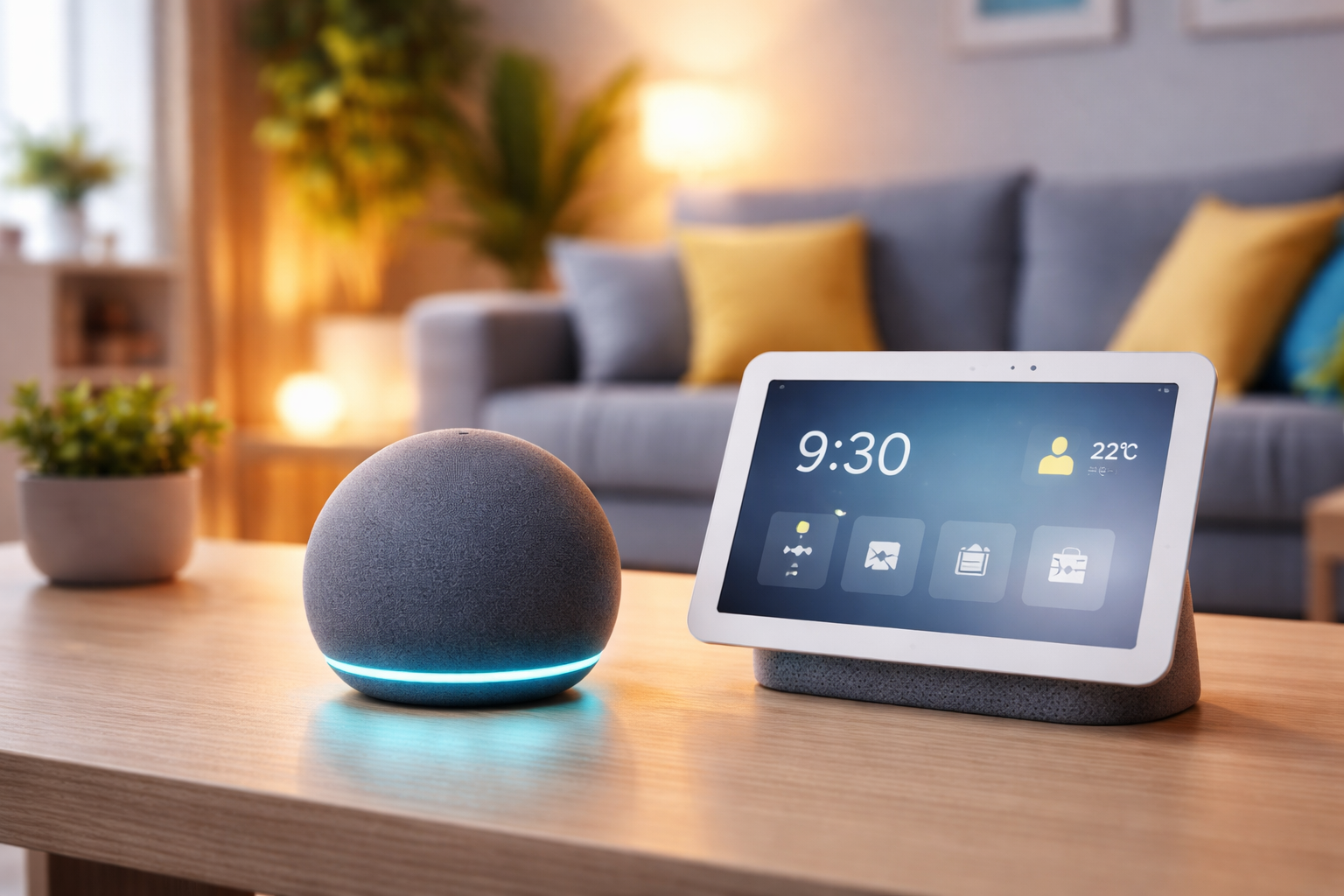
🧠 How Smart Assistants Like Alexa and Google Home Are Getting Smarter in 2026
In 2026, smart assistants like Amazon Alexa, Google Home, and Apple’s Siri are no longer just devices that play music or tell the weather — they’re becoming intelligent digital companions that understand emotions, learn routines, and make life more seamless than ever before.
Let’s explore how these virtual assistants are evolving and what new features make them smarter this year.
🔊 1. Smarter Conversations with Generative AI
The biggest upgrade in 2026 comes from generative AI integration. Alexa and Google Home now use advanced natural language models that allow human-like conversations.
Instead of short commands, users can talk casually:
“Alexa, plan a relaxing evening for me,”
and the assistant will adjust the lighting, play calming music, and even suggest a movie based on your past preferences.
This conversational depth makes them feel more personal and context-aware than ever before.
🏡 2. Deeper Smart Home Integration
Smart assistants are now the brain of smart homes. From managing temperature and lighting to controlling security systems, the 2026 versions connect with nearly every IoT device.
Google Home, for instance, now supports cross-brand automation — meaning your Philips smart bulbs, Samsung fridge, and Xiaomi air purifier can all talk to each other seamlessly.
This year, Amazon also expanded its Matter protocol compatibility, ensuring your entire smart home network runs smoothly without extra hubs or apps.
🔐 3. Improved Privacy and On-Device Processing
Privacy has always been a concern for smart devices. But in 2026, companies are focusing heavily on edge computing — meaning your voice data is processed locally on the device instead of being sent to cloud servers.
This results in faster responses, stronger privacy, and fewer risks of data misuse.
Both Alexa and Google Home now offer customizable privacy dashboards, where users can delete voice history, disable microphones, or control how much data is stored.
⏰ 4. Predictive Routines and Automation
Smart assistants now go beyond following commands — they predict what you need.
If you leave home every morning at 8:30, Alexa might automatically start your car’s AC at 8:20. Google Home can remind you to take an umbrella if rain is forecasted along your usual route.
This predictive intelligence, powered by AI learning, makes everyday life more intuitive and efficient.
🎧 5. Enhanced Entertainment Features
The entertainment game has also leveled up. Alexa can now sync across multiple devices, letting you play the same song throughout your house or host interactive trivia nights with voice commands.
Google Home integrates with YouTube Shorts and Android TV, allowing you to watch or control short-form videos hands-free.
These features blend fun and functionality — turning your assistant into a complete multimedia partner.
💬 6. Multilingual and Emotion Recognition Upgrades
In 2026, voice assistants are not just smarter — they’re also more emotionally aware.
New emotion-detection algorithms can recognize your tone of voice. If you sound tired, Alexa might lower the lights and play soft music automatically.
Plus, multilingual households benefit from seamless language switching — you can speak in English, Hindi, or Hinglish, and the assistant understands perfectly.
🌍 7. Integration with AI Ecosystems
The future is connected — and so are smart assistants.
Alexa now integrates with Amazon’s AI-powered shopping and productivity tools, while Google Assistant connects with Gemini AI for context-rich answers, real-time summaries, and more natural interactions.
This fusion of AI models makes assistants more than just reactive — they’re now proactive digital partners.
🚀 The Future Ahead
By the end of 2026, smart assistants are expected to become part of every digital ecosystem — from home automation and health tracking to personal finance and education.
With smarter AI, better privacy, and deeper integration, devices like Alexa and Google Home are not just keeping up with technology — they’re leading it.
🔑 Key Takeaway:
Smart assistants are evolving from simple voice tools into AI-powered lifestyle companions. As they continue to learn, adapt, and understand human emotions, 2026 might just be the year they truly become part of the family.