


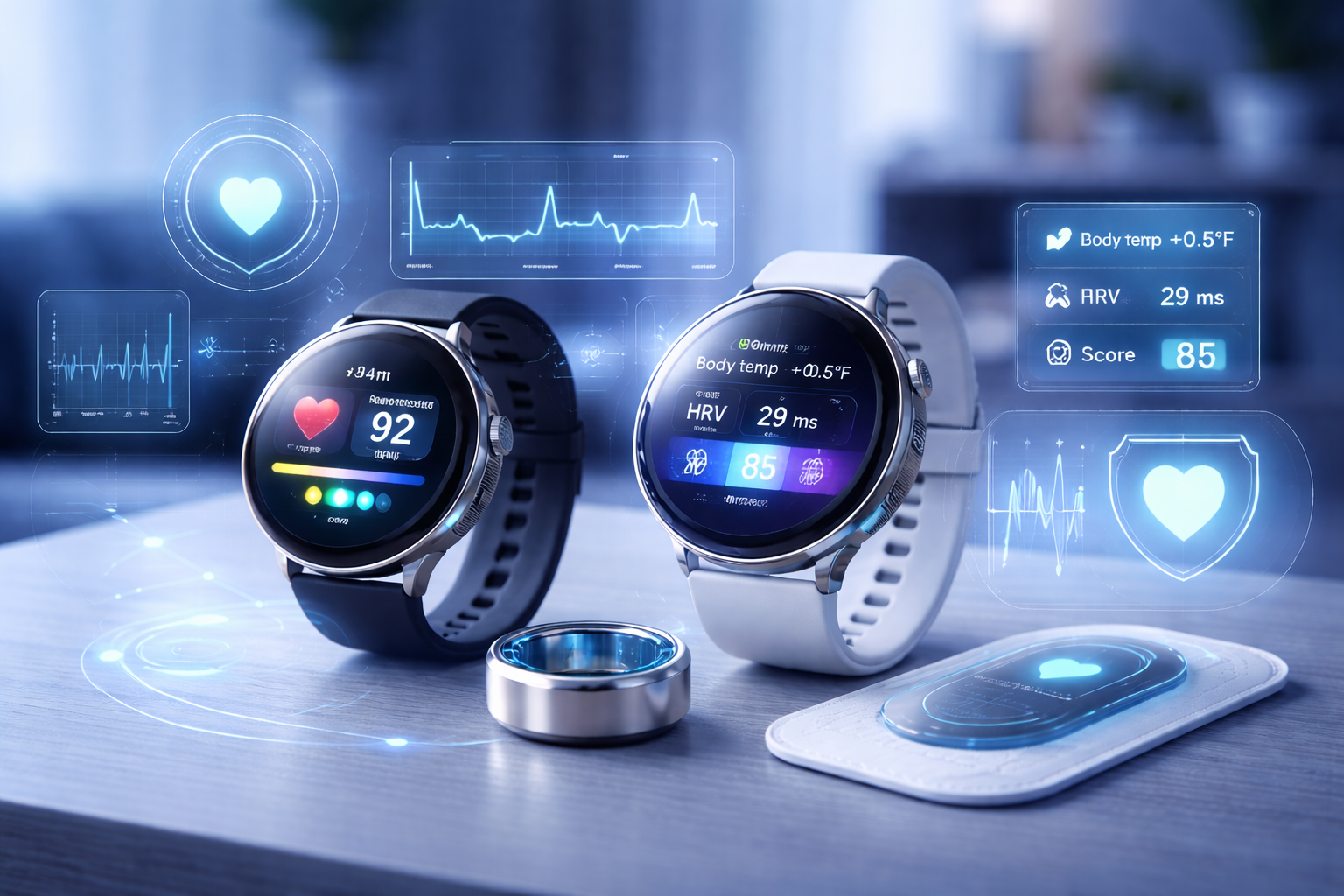
🩺 Wearable Health Gadgets That Predict Illness Before It Happens
Technology has evolved from helping us communicate to helping us stay healthy — and in 2026, wearable gadgets have taken this mission to a whole new level. Today’s smartwatches, rings, and patches don’t just track your fitness; they can predict potential illnesses before any visible symptoms appear.
Let’s explore how these next-generation health wearables are changing preventive healthcare.
🧠 1. From Tracking to Predicting — The New Era of Health Wearables
A few years ago, wearables could only track steps, heart rate, and calories. Now, thanks to AI and biosensor technology, they can detect subtle changes in your body — like oxygen levels, temperature, sleep patterns, and heart variability — and compare them with long-term data.
These insights allow devices to spot early warning signs of conditions such as dehydration, viral infections, fatigue, or even heart problems, giving users time to act before symptoms become serious.
⌚ 2. Smartwatches Leading the Revolution
Modern smartwatches have turned into mini health labs on your wrist. Devices like the Apple Watch Series 10, WHOOP 5.0, and Samsung Galaxy Watch 7 now use advanced sensors and machine learning to predict possible health issues.
For example:
-
Apple Watch can alert users about irregular heartbeat patterns linked to atrial fibrillation.
-
WHOOP 5.0 measures strain and recovery to predict when your body is overworked or prone to illness.
-
NoiseFit and Fitbit models track continuous body temperature to warn about early signs of fever or viral infection.
These alerts act as an early detection system, helping users rest, hydrate, or seek medical advice before illness strikes.
💍 3. Smart Rings and Patches — The Future Is Smaller
While watches dominate the market, smart rings and health patches are the next big thing.
The Oura Ring Gen 4 and Ultrahuman Ring Air offer detailed health analytics — sleep cycles, heart rate variability, and stress prediction — with precision once only found in medical devices.
Meanwhile, biometric skin patches use nanotech to measure hydration, glucose, and body chemistry in real time. Athletes and patients alike use these for continuous health monitoring without bulky devices.
🩸 4. Predictive Analytics — The AI Behind the Magic
What truly powers illness prediction is AI-driven health analytics. These wearables continuously collect and analyze biometric data to find unusual trends.
For instance, if your heart rate and temperature rise slightly every night, your wearable’s algorithm might recognize the pattern as a potential infection or fatigue build-up — sending an alert before you even feel sick.
Healthcare providers are also beginning to integrate these analytics into telemedicine platforms for real-time patient monitoring.
🌐 5. Connected Ecosystems for Preventive Health
Today’s wearables connect with cloud platforms and health apps to form a personal wellness ecosystem.
AI systems analyze user data across months or years to give precise insights — such as predicting seasonal allergies, menstrual cycles, or mental stress phases.
In 2026, companies like Google Health, Fitbit, and Garmin are exploring partnerships with hospitals and insurance providers to encourage preventive care based on wearable data.
🔐 6. Privacy and Ethical Innovation
While predictive health tech is promising, it raises new concerns about data privacy.
Modern devices now include on-device encryption, meaning your health data stays on your gadget unless you approve sharing it. This privacy-first approach ensures that innovation never comes at the cost of user trust.
🚀 7. The Future of Predictive Health
By 2030, experts believe wearables will not only predict illnesses but also suggest personalized treatments using AI-powered recommendations. Imagine your smartwatch detecting dehydration and ordering electrolyte water for you automatically — that future isn’t far.
As machine learning grows smarter and sensors become more accurate, predictive health wearables will shift healthcare from reactive to proactive, saving lives and costs along the way.
🩵 Final Thoughts
Wearable health gadgets are no longer just cool accessories — they’re digital health guardians.
By identifying warning signs before we feel them, these innovations are giving us the most valuable gift of all: time to act early.
In 2026 and beyond, prevention truly becomes the best medicine — powered by the tech on your wrist.